
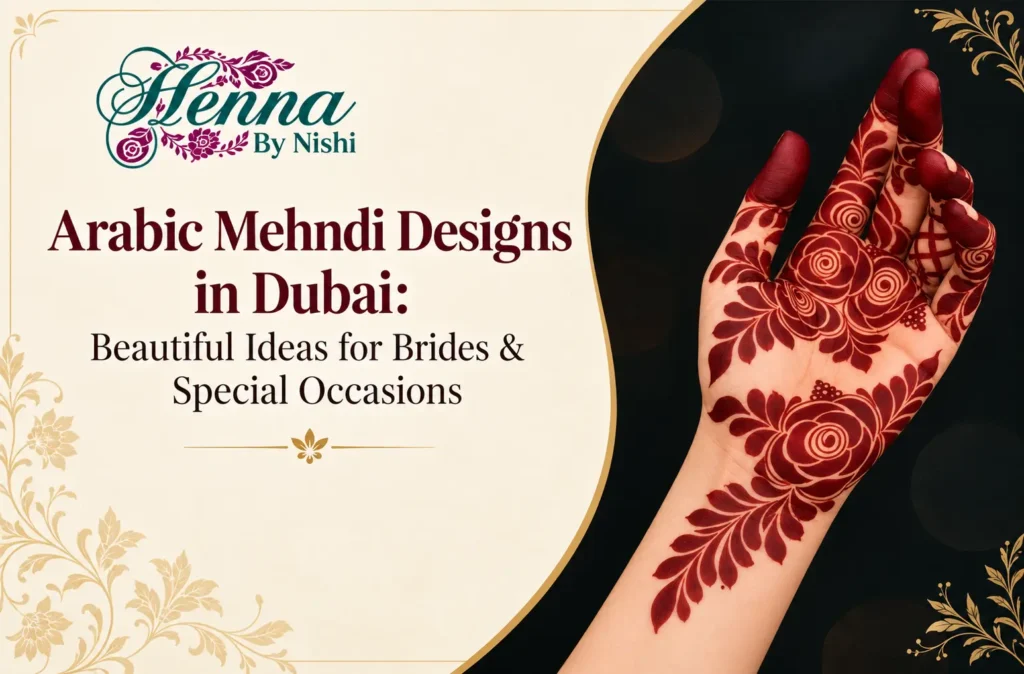
Arabic mehndi designs are loved for their graceful flow, bold floral patterns, and elegant use of negative space. In Dubai, where weddings, Eid celebrations, family gatherings, and special events often call for polished yet individual styles, Arabic mehndi can be a beautiful choice for both traditional and contemporary looks.
Whether you are a bride looking for detailed hand and foot mehndi or a guest wanting something elegant for an evening celebration, there are plenty of ways to adapt an Arabic-inspired design to the occasion.
What Makes Arabic Mehndi Designs Different?
Arabic mehndi is generally recognised for its flowing composition rather than densely covering the entire hand. Floral trails, leaves, vines, paisleys, and bold outlines are often arranged diagonally or along the fingers and wrist.
Compared with very intricate full-hand patterns, Arabic designs often leave intentional areas of skin visible. This negative space gives the design a lighter, more open appearance while allowing individual motifs to stand out.
Some popular characteristics include:
- Large flowers and leafy vines
- Curved, flowing trails across the hand
- Paisley and teardrop motifs
- Bold outlines with finer interior details
- Open spaces between major elements
- Designs that extend naturally from fingers towards the wrist or forearm
The style can also be customised. A traditional floral Arabic pattern can be made more elaborate for a bride or kept simple for Eid, a party, or a family gathering.
Beautiful Arabic Mehndi Ideas for Brides
Bridal mehndi is usually more detailed than designs chosen for everyday celebrations. Arabic-inspired patterns can be particularly attractive for brides who want a combination of statement motifs and elegant open spaces.
1. Full-Hand Arabic Bridal Design
A full-hand design can combine large florals, paisleys, leaves, fine vines, and detailed finger patterns. Rather than filling every section uniformly, the composition can be arranged so that the main motifs remain visually prominent.
For a Dubai bride wearing a heavily embellished outfit, this approach can create an interesting balance: the mehndi can be detailed without competing with every element of the bridal look.
2. Arabic Mehndi with Fine Detailing
If you like the structure of Arabic designs but prefer a more intricate bridal finish, ask for fine lines, delicate florals, lace-inspired details, and additional finger work.
This is a useful option for brides who want the flowing character of Arabic mehndi while still having plenty of detail to photograph from close up.
3. Arabic Mehndi for Hands and Feet
Arabic-inspired patterns can be extended from the hands to the feet using coordinating flowers, vines, paisleys, and ornamental borders.
For bridal mehndi, matching the visual language across hands and feet can create a more cohesive overall look without requiring identical designs.
If you are planning bridal mehndi in Dubai, you can also explore the dedicated bridal henna designer service for more information about bridal-focused options.
4. Minimal Arabic Bridal Mehndi
Not every bride wants completely covered hands. A minimalist Arabic design can feature one or two prominent floral trails with detailed fingers and plenty of open space.
This style works particularly well for brides who prefer contemporary jewellery, simpler outfits, or a clean and elegant aesthetic.
Arabic Mehndi Designs for Weddings
You do not have to be the bride to wear beautiful mehndi at a wedding. Bridesmaids, sisters, cousins, and wedding guests can choose lighter Arabic patterns that complement their outfits without looking overly bridal.
For a wedding guest, consider:
- A floral Arabic trail across the back of the hand
- A wrist-to-finger vine
- A bold floral motif with delicate leaves
- A semi-filled design with decorated fingertips
- Matching small motifs on both hands
If your outfit already has heavy embroidery, sequins, or elaborate jewellery, a moderately detailed mehndi design may provide a more balanced appearance.
Arabic Mehndi for Eid in Dubai
Eid is a natural occasion for elegant, wearable mehndi. Many people prefer designs that look festive but do not take as long to apply as elaborate bridal patterns.
A simple Arabic floral arrangement can work beautifully for Eid because it gives the hands a decorated appearance while retaining plenty of open space.
For a softer Eid look, you could choose:
- Small flowers and leaves around the wrist
- A single diagonal floral trail
- Delicate finger detailing
- A simple palm motif
- A back-of-the-hand design with an open centre
You can also coordinate your mehndi with your Eid outfit. Gold, cream, pastel, jewel-toned, and richly embroidered clothing can all be paired with different Arabic-inspired patterns depending on the overall look you want.
Arabic Mehndi for Parties and Special Occasions
Arabic mehndi is not limited to weddings and Eid. Its adaptable style makes it suitable for birthday celebrations, engagement parties, baby showers, cultural events, family gatherings, and other occasions.
For a party, you may want something quicker and lighter than bridal mehndi. A statement flower surrounded by leaves and fine vines can make the design noticeable without covering the entire hand.
If you are hosting a celebration and want mehndi to be part of the experience, a henna party service can provide useful information about options for group occasions.
How to Choose the Right Arabic Mehndi Design
The best design is not necessarily the most detailed one. Think about the occasion, your outfit, how long you want the application to take, and the overall style you naturally prefer.
Consider the Occasion
Start with the event.
- Bridal ceremony: Consider more detailed compositions, coordinated hands and feet, and personalised elements.
- Wedding guest: Choose a medium or lighter design so it remains elegant without looking overly bridal.
- Eid: Floral trails, delicate fingers, and simpler compositions are versatile choices.
- Party: A bold statement motif or contemporary Arabic pattern can work well.
- Family gathering: A simple, comfortable design may be all you need.
Match the Design to Your Outfit
Your clothing can help determine how much detail your mehndi should have.
A heavily embellished outfit may pair well with a more structured design that has visible open areas. With a simpler outfit, you might choose a more detailed mehndi pattern to make the hands a stronger part of the overall look.
Also consider sleeve length, jewellery, embroidery, and the colours and textures of your outfit.
Think About Your Personal Style
Your mehndi should feel like you.
If you prefer understated beauty, choose a minimal floral trail. If you love traditional detail, consider layered florals, paisleys, and intricate finger work. If you prefer a contemporary look, ask for cleaner compositions with larger motifs and more negative space.
Decide Where You Want the Design
Arabic mehndi can be adapted to different areas of the body. You might choose:
- Palm and fingers
- Back of the hand
- Wrist
- Forearm
- Feet and ankles
Placement can change the overall character of the design. A diagonal trail, for example, can create a graceful sense of movement across the hand, while a central floral motif can give a more symmetrical appearance.
Arabic Mehndi Design Trends for Dubai Brides
Dubai weddings often bring together different cultural influences, fashion styles, and beauty traditions. This makes mehndi customisation particularly useful.
Rather than choosing a design simply because it is trending, consider combining elements that suit your bridal outfit and personal taste. A bride might choose traditional Arabic florals with contemporary spacing, delicate finger details with larger palm motifs, or a more elaborate design on one part of the hand balanced by simpler detailing elsewhere.
The result can feel traditional while still fitting comfortably into a modern Dubai wedding.
Tips Before Your Mehndi Appointment
A little preparation can make the experience more comfortable.
Choose Your Design in Advance
Save a few reference images that show the type of flowers, coverage, finger detailing, and overall density you like. You do not necessarily need to copy one design exactly; references can help communicate your preferences.
You can browse a mehndi design gallery for ideas and compare different styles before your appointment.
Think About Your Schedule
Allow enough time for application and drying, particularly if you are getting bridal mehndi. Avoid scheduling the appointment so close to an important event that you have to rush immediately afterwards.
Consider Your Hands and Jewellery
If you plan to wear statement rings, bangles, or other hand jewellery, think about where those pieces will sit. Leaving some areas open can allow both the jewellery and mehndi to remain visible.
Follow Aftercare Instructions
Once the mehndi has been applied, proper aftercare can help you get the best possible result from the natural stain. Ask your henna artist for specific instructions suited to the paste and application.
Natural Henna or a Different Look?
Traditional henna gives a warm orange-to-brown or reddish-brown stain that develops over time. The final colour can vary depending on factors such as the henna paste, skin, application, and aftercare.
If you are considering alternatives for a particular event or outfit, you may also want to explore white henna as a different temporary decorative option. It creates a very different visual effect from traditional henna and may suit certain contemporary outfits or event themes.
Final Thoughts
Arabic mehndi offers plenty of flexibility for celebrations in Dubai. Its combination of bold florals, flowing vines, elegant spacing, and adaptable detailing makes it possible to create anything from a simple Eid design to a highly detailed bridal pattern.
When choosing your design, look beyond the latest trend. Think about the occasion, your outfit, jewellery, preferred level of coverage, and the kind of mehndi you genuinely enjoy wearing. A well-planned design should complement your overall look while still feeling personal.
Whether you are preparing for a Dubai wedding, getting ready for Eid, attending a special celebration, or simply want beautiful temporary body art, Arabic-inspired mehndi can be tailored to suit the moment.
Frequently Asked Questions About Arabic Mehndi in Dubai
Is Arabic mehndi suitable for brides?
Yes. Arabic-inspired patterns can be adapted for bridal mehndi, from relatively simple floral compositions to highly detailed designs covering the hands and feet.
Is Arabic mehndi only suitable for weddings?
No. The style can be adjusted for Eid, parties, engagements, family celebrations, maternity events, and other occasions.
How is Arabic mehndi different from Indian-style mehndi?
Arabic designs are often recognised by their flowing floral and leafy arrangements, larger motifs, diagonal compositions, and use of open space. Indian mehndi can often feature denser coverage and more intricate, tightly packed patterns. There is plenty of overlap, however, and modern designs can combine elements from different traditions.
Can I customise an Arabic mehndi design?
Absolutely. You can discuss the preferred level of coverage, flowers, paisleys, finger details, placement, and overall style with your henna artist. Personalising the composition can help the design complement your outfit and occasion.
What Arabic mehndi design should I choose for Eid?
A lighter floral trail, decorated fingers, or a simple back-of-the-hand pattern can be a practical choice for Eid. If you enjoy more intricate mehndi, you can increase the detailing while keeping the overall composition open and wearable.
