
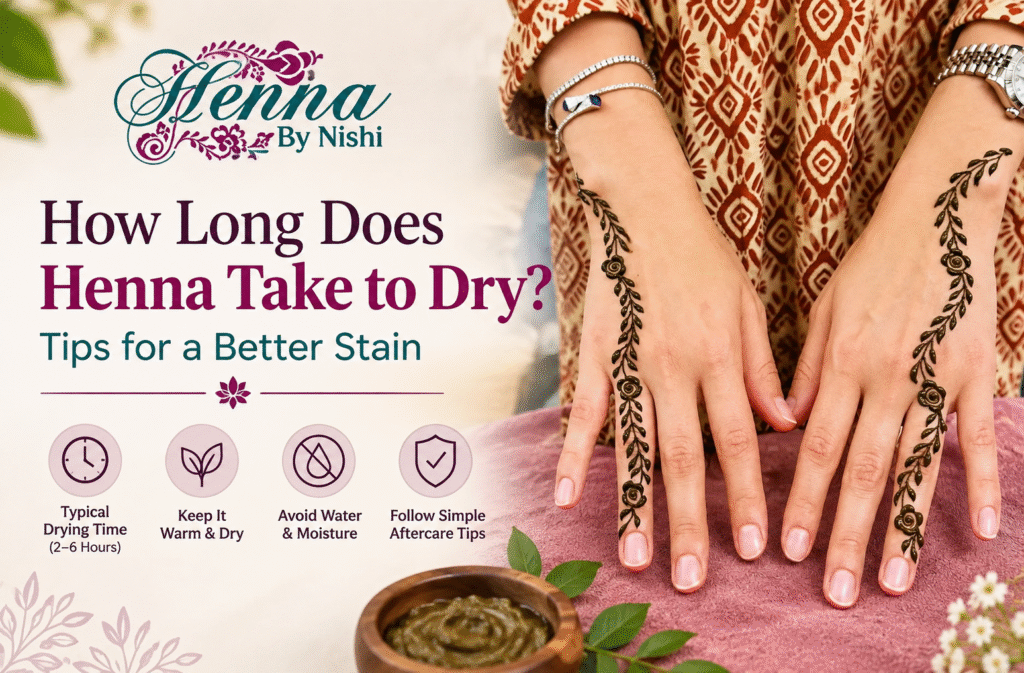
Wondering how long henna take to dry after applying a beautiful design to your hands or feet? Generally, henna takes around 20–30 minutes to become touch-dry, depending on the paste, design thickness, temperature, and humidity. However, drying is only the first step. For a deeper, longer-lasting stain, you usually need to leave the paste on your skin for several hours before gently removing it.
Whether you are preparing for a wedding, Eid celebration, party, or special occasion, understanding how Henna mehndi dries can help you protect your design and achieve a richer reddish-brown stain. Using fresh, natural henna, following the right aftercare routine, and avoiding common mistakes can make a noticeable difference.
At Henna By Nishi, we understand that beautiful henna art is about more than intricate patterns. Proper application, quality ingredients, and careful aftercare all contribute to a satisfying result.
How Long Does Henna Take to Dry Completely?
Henna paste does not dry instantly. Once applied, the moisture gradually evaporates, allowing the paste to become firm enough to remain on the skin without smudging easily.
For most designs, the surface may become touch-dry within 20–30 minutes. Thicker patterns, dense bridal designs, and humid weather can extend this time.
However, touch-dry does not mean ready to remove. The henna needs sufficient contact time with the skin to release its dye and develop a stronger stain.
Here is a general guide to the different stages:
| Stage | Approximate time | What happens |
|---|---|---|
| Initial drying | 10–20 minutes | The surface begins to lose moisture |
| Touch-dry stage | 20–30 minutes or longer | The paste becomes less sticky |
| Recommended paste wear | Around 4–8 hours or as advised | The dye has more time to transfer into the skin |
| Initial stain development | First 24–48 hours | The colour gradually deepens |
| Mature stain | Around 48–72 hours | The colour typically reaches its deeper reddish-brown shade |
These timings are estimates, not guarantees. The paste formulation, skin type, application thickness, and environmental conditions can all affect the process.
7 Factors That Affect How Quickly Henna Dries
Several factors influence how long henna takes to dry and how well the stain develops. Understanding them can help you care for your design more effectively.
1. Quality and Freshness of Henna Paste
Fresh, properly prepared henna paste is important for achieving a good stain. Its consistency should be suitable for smooth application without being excessively watery or difficult to spread.
High-quality natural henna contains lawsone, the plant-derived dye molecule responsible for staining the skin. Freshness, preparation, and storage can influence how effectively the dye is released.
Choose a henna artist who can explain the ingredients and preparation methods. Avoid products with undisclosed chemicals or questionable additives.
2. Thickness of the Applied Design
Thin lines and delicate patterns often become touch-dry faster than thick, heavily filled designs. Bridal Henna mehndi featuring dense florals, mandalas, and detailed shading may require more time to dry.
Avoid touching the design repeatedly to check whether it is dry. Doing so can distort fine lines and transfer paste onto nearby skin or clothing.
3. Temperature and Humidity
Environmental conditions can significantly affect drying time.
Warm, dry surroundings may help moisture evaporate more quickly, while humid weather can keep the paste damp for longer. Air conditioning, fans, and direct sunlight can also influence how the paste behaves.
Allow your design to dry naturally in a comfortable environment. Avoid excessive heat or direct sunlight, which can irritate the skin and may interfere with comfortable aftercare.
4. The Area Where Henna Is Applied
Henna applied to the palms and soles often develops a deeper stain than henna applied to the backs of the hands, arms, or other body areas. This is partly related to differences in skin thickness and the characteristics of the outer skin layer.
The location can also affect how easily the design gets rubbed, washed, or smudged during daily activities.
5. The Ingredients Used in the Paste
Natural henna paste typically contains henna powder, a suitable liquid, and ingredients selected to support dye release and application. Recipes vary between artists.
Some preparations may dry faster or slower because of their consistency and ingredients. However, faster drying does not automatically mean better colour.
Choose a reputable artist who uses transparent, skin-appropriate ingredients instead of relying on unknown products marketed as instant or extra-dark henna.
6. Your Skin’s Condition
Skin preparation can influence how evenly henna stains the surface. Excess oil, lotions, or residue may interfere with direct contact between the paste and skin.
Before your appointment, follow your artist’s preparation instructions. Clean, dry skin is generally preferable, and any products applied before the session should be discussed with the artist.
7. The Henna Application Technique
An experienced artist applies paste with suitable consistency and controlled pressure to create clean lines and an even design.
Good application helps reduce smudging and supports consistent contact between the paste and skin. It also allows the artist to create detailed patterns without unnecessarily thick layers.
How to Make Your Henna Stain Darker Naturally?
A beautiful henna design depends on both application and aftercare. Although no method can guarantee a particular shade, these practices may help support better colour development.
Leave the Paste on for Enough Time
Once the design is touch-dry, resist the urge to remove it immediately. Many people leave natural henna paste on for approximately 4–8 hours, or follow the duration recommended by their henna artist and product instructions.
Some people leave it on longer when comfortable and appropriate for the formulation. However, longer wear does not guarantee a darker result, and the paste should never cause irritation.
Remove the Paste Gently
When you are ready to remove the dried paste, gently scrape or rub it away rather than washing it off immediately with water.
Use a soft hand and avoid aggressive rubbing, which can irritate the skin. Follow your artist’s instructions for the specific paste used.
Avoid Water Immediately After Removal
Where practical, avoid washing the stained area with water for several hours after removing the paste. This allows the stain to continue developing without unnecessary early washing.
Follow your artist’s advice, especially if you need to clean the area for hygiene reasons. Do not compromise skin cleanliness to preserve colour.
Keep the Skin Comfortable and Moisturised
Once the paste has been removed and the stain has started developing, a suitable moisturiser or skin-safe natural oil may help prevent excessive dryness.
Apply products gently and avoid anything that causes irritation. Moisturising supports skin comfort, but it cannot guarantee a darker stain.
Protect the Design from Excessive Friction
Repeated rubbing, exfoliation, swimming, and frequent washing can contribute to faster fading as the outer skin naturally sheds.
Be gentle with the design during the first few days. Avoid scrubbing the area, and allow the colour to develop naturally.
Natural Henna vs. Instant Henna: What to Know
Not all henna products behave in the same way. Understanding the difference can help you make a safer choice.
| Feature | Natural henna | Products marketed as instant or black henna |
|---|---|---|
| Typical colour development | Gradual, often deepening over 24–72 hours | Varies by formulation |
| Typical stain colour | Orange to reddish-brown or brown | May appear unusually dark or black |
| Ingredient considerations | Check for transparent, suitable ingredients | Some products may contain harmful additives |
| Drying time | Depends on paste consistency and conditions | Varies considerably |
| Safety | Still requires appropriate use and precautions | Requires particular caution if ingredients are unclear |
Natural henna does not usually produce an immediate jet-black skin stain. Be cautious with products that promise instant black results, especially when their ingredients are not disclosed.
Some black henna products contain para-phenylenediamine (PPD), a chemical that can cause serious skin reactions. Avoid applying products containing PPD to the skin as henna. Ask about ingredients before treatment, and do not assume a product is safe simply because it is sold as natural.
Common Mistakes That Can Affect Henna Results
Even a carefully applied design can be affected by poor aftercare. Avoid these common mistakes to protect your Henna mehndi.
- Removing the paste too early: This may reduce the time available for dye transfer.
- Washing the design immediately: Early washing may interfere with the recommended aftercare routine.
- Using excessive heat: Direct heat can irritate the skin and is not a guaranteed way to improve colour.
- Scrubbing the stained area: Friction can irritate the skin and contribute to faster fading.
- Choosing unknown ingredients: Unclear formulations may pose unnecessary safety risks.
- Expecting an instant dark stain: Natural henna colour develops gradually, often becoming deeper over two to three days.
Following simple aftercare instructions is generally more useful than experimenting with harsh products or unverified home remedies.
When Should You Apply Henna Before an Event?
Timing your appointment correctly can help you enjoy your design without worrying about drying or colour development.
For weddings, Eid, parties, and other special occasions, consider booking your henna session sufficiently early for the paste to remain on your skin for the recommended period and for the stain to develop.
For example, if you want a deeper colour for a Saturday event, applying natural henna on Thursday or Friday may provide time for the colour to mature, depending on your schedule and the artist’s advice.
Keep in mind that the ideal timing varies by occasion, design complexity, and individual skin characteristics. Bridal designs may require longer application sessions than simple patterns.
Why Choose Henna By Nishi for Your Henna Design?
Choosing an experienced henna artist can make the entire experience more enjoyable, from design selection to aftercare. Henna By Nishi offers henna artistry for clients looking for detailed patterns, personalised designs, and beautiful henna applications in Dubai.
The focus on natural henna, careful application, and attention to individual preferences helps clients understand what to expect from their design. Before booking, discuss your preferred pattern, event date, skin sensitivities, and aftercare requirements.
Whether you prefer delicate Arabic patterns, traditional Indian motifs, or elaborate bridal designs, choosing an artist who values ingredient transparency and proper application can help you make a more informed decision.
Frequently Asked Questions
1. How long does henna take to dry on hands?
Henna generally becomes touch-dry in approximately 20–30 minutes, although thick designs and humid conditions can extend the time. For a better stain, the paste usually needs to remain on the skin for several hours.
2. Can I wash my hands after henna dries?
It is generally better to avoid washing the paste off immediately after it becomes touch-dry. Once you remove it, follow your artist’s instructions about water exposure. If handwashing is necessary for hygiene, do not avoid it solely to preserve the stain.
3. Why is my henna stain orange instead of dark brown?
Freshly removed natural henna often leaves an orange stain. The colour typically deepens over the next 24–72 hours as it oxidises. The final shade depends on skin location, paste quality, and individual skin characteristics.
4. Does leaving henna on overnight make it darker?
Longer contact time may help the dye develop, but leaving henna on overnight does not guarantee a darker stain. Follow the recommended wear time for your paste, and remove it if you experience itching, burning, or irritation.
5. How can I make my Henna mehndi last longer?
Allow the stain to develop, avoid excessive scrubbing and exfoliation, and moisturise gently to help keep the skin comfortable. Natural henna gradually fades as the outer skin sheds, so the duration varies between individuals and application areas.
Book Your Henna Experience with Henna By Nishi
A beautiful henna stain starts with appropriate ingredients, careful application, and the right aftercare. Understanding how long henna takes to dry helps you protect your design and plan around important occasions.
Ready to get a beautiful henna design for your wedding, celebration, or special event? Visit Henna By Nishi to explore henna artistry in Dubai and enquire about a design tailored to your occasion.
